
If you use the Fibertec 8000 regularly for ADF/NDF analysis, you already know that small maintenance issues can quickly become major downtime problems.
Many unexpected errors are not caused by failed electronics, but by clogged tubing, unstable pressure, worn seals, or neglected reagent handling.
Here are several practical preventive maintenance tips based on real field service experiences.
1. Keep the Pressure/Vacuum System Clean
One of the most common complaints is:
- Weak pressure during discharge
- Slow reagent draining
- W16 errors
- Poor rinsing performance
In many cases, the problem is not the pump itself.
Check These First:
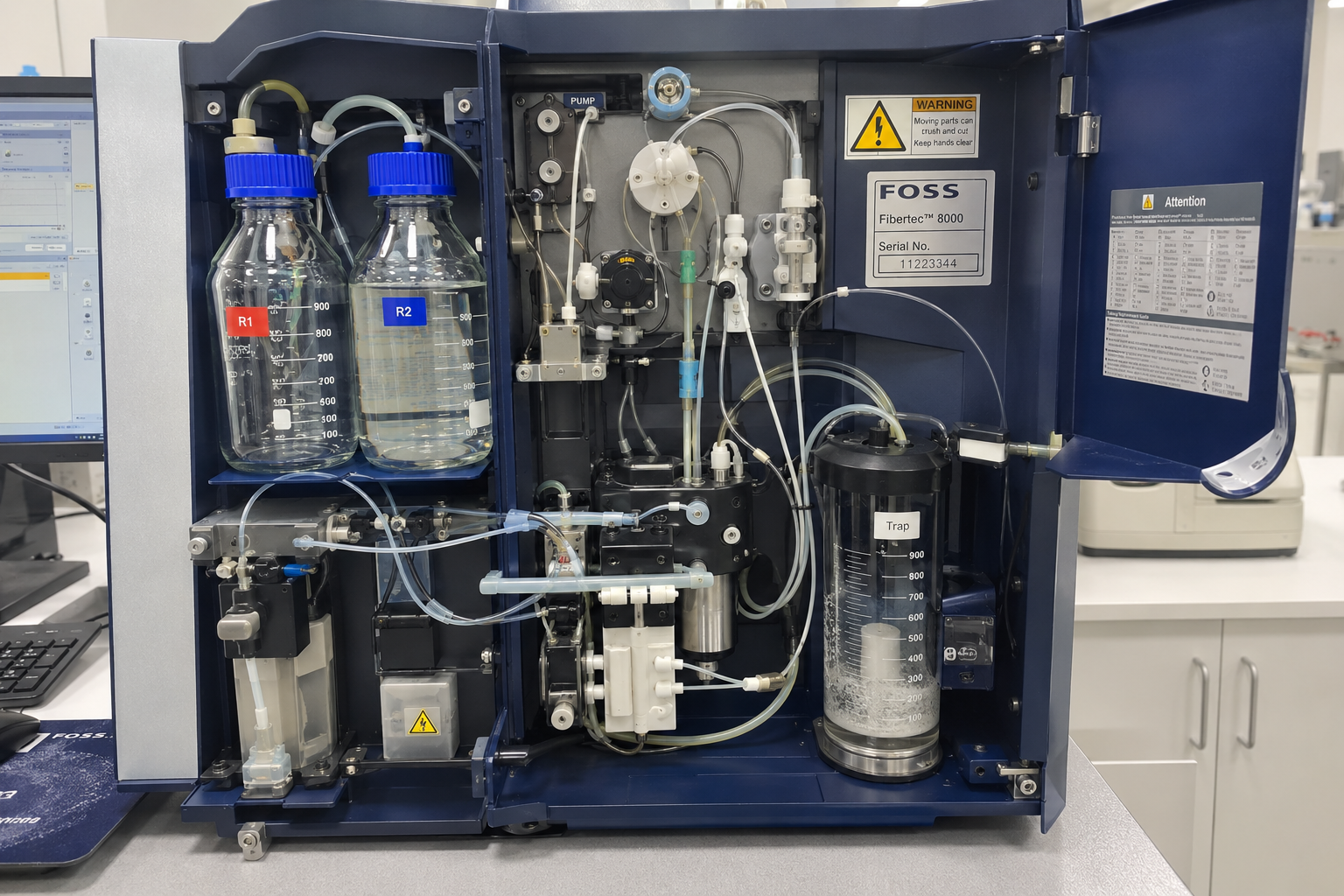
- Trap bottle contamination
- Moisture inside tubing
- Crystallized detergent/reagent residue
- Loose tube connections
- Small leaks around fittings
Even a tiny air leak can reduce pressure performance significantly.
Good Practice
- Empty and clean trap bottles weekly
- Inspect tubing for discoloration or hardening
- Replace old silicone tubes before they crack
- Confirm proper bubbling during pressure operation
2. Watch the Metering Pump Behavior
The metering pump is critical for accurate reagent dosing.
Symptoms of early pump problems:
- Reagent fills become inconsistent
- Actual values fluctuate heavily
- Random E10 alarms
- R1 fill levels vary between positions
Preventive Tip
Do not wait until the pump completely fails.
If the pump becomes noisy, inconsistent, or slow, service it early before it affects analytical results.
3. Avoid Excess Foam During Boiling
Foaming is a hidden enemy during fiber analysis.
Too much foam can:
- Contaminate tubing
- Reach the trap system
- Cause unstable pressure readings
- Increase cleaning frequency
Recommendations
- Use octanol correctly
- Avoid overloading difficult samples
- Monitor high-fat or high-protein materials carefully
- Clean foam residue immediately after overflow incidents
4. Check Reagent Bottle Temperature
A warm reagent bottle can indicate:
- Excessive circulation
- Internal valve leakage
- Pressure imbalance
- Pump stress
Operators often ignore this early warning sign.
If a reagent bottle becomes unusually warm during operation, inspect the fluid path before larger failures occur.
5. Verify Pressure Values During Startup
During startup, pressure values can reveal hidden issues before alarms appear.
For example:
- Stable pressure behavior usually indicates healthy flow
- Unstable or rapidly dropping values may indicate leaks or valve issues
Trend monitoring is one of the easiest ways to detect problems early.
6. Clean After Difficult Samples
Certain feed and pet food samples create much heavier contamination.
Especially:
- High-fat feed
- Mineral-rich samples
- Sticky premixes
- Fine powder materials
After these runs:
- Flush thoroughly
- Clean cups and adapters immediately
- Inspect drain paths before the next batch
Skipping cleanup today often creates troubleshooting tomorrow.
Final Thoughts
Most Fibertec™ 8000 problems do not appear suddenly.
The instrument usually gives small warning signs first.
Regular inspection and simple preventive maintenance can:
- Reduce downtime
- Improve analytical stability
- Extend component lifetime
- Prevent emergency service visits
For busy laboratories, prevention is always cheaper than recovery.